Quote of the Day

"Fill your paper with the breathings of your heart."

- William Wordsworth

14 March 2014

Thanks but No Thanks, or Why I Won’t Be Accepting Your Nomination to Take a ‘No Makeup Selfie’

Let’s face it: people judge others based on their appearance constantly. I do it. I know that you do it, no matter how high and mighty you may try to have me think you are. People are programmed to judge others as a means of self-preservation: I have this perception of you, thus I will treat you in this way. It’s an adaptation we’ve developed in order to navigate social situations.

The physical signals a person gives off, are the most significant contributors to how we formulate a first impression. For example, when we see someone who hasn’t washed their hair in three days we think, ‘Wow, that guy has poor hygiene.’ If a co-worker wears sweatpants to the office we think, ‘She obviously doesn’t take her job very seriously.’ When we see someone covered in tattoos or with a brand emblazoned across her/his chest or dressed in clothing that hasn’t been in style for decades, we associate these people with certain stereotypes and preconceived notions that society has spelled out for us through years of social conditioning and popular imagery.

We judge people, and it’s a fact, and yet rather than attempting to engage with a dialogue about why we judge each other, we come up with public displays of ‘acceptance’ in a bravura performance of self-confidence which – rather than combating the issue at hand: feminine insecurity as spurred on by the beauty industry – enforces women in identifying their worth through physical appearance by focusing on this aspect of self.

My point of view on this subject may come as a shock to some who know that I am a die-hard feminist with massive opinions about female sexuality, identity, and choice. However, I also have a tiny shopping addiction, and I firmly believe that one of the most interesting ways of expressing oneself is through fashion and makeup. I whole-heartedly support Coco Chanel’s affirmation that ‘There are no ugly [people] in the world, just lazy ones,’ and you can sour grapes at me all you want, but I know from first-hand experience that it does not take much effort to look good and thus feel capital-G great.

Not that I don’t believe that women who don’t wear makeup are not beautiful. Just the contrary! A woman who is confident while makeup-free is just as elegant and beautiful as a woman with a fully done face. My problem with the ‘no makeup selfie’ is that it implies the need for a dichotomy between ‘insecure makeup wearers’ and ‘confident non-makeup wearers’. There shouldn’t have to be a black-and-white distinction, an issue which arises over and over in feminist discourse. 

Just as feminism does not meant that women want to be men, so it also means that a woman should not be defined by how much or how little makeup she wears. Feminism is about choice, and by ‘nominating’ me to take a makeup-free photo the element of choice has been removed and replaced by an unreal expectation that a woman is not a ‘real woman’ unless she shuns the traditional physical trappings of femininity. Feminism means I have the freedom to choose to wear makeup or to choose not to – not that I have to conform one way or the other.

That being said, my personal preference is and always will be to wear makeup. I grew up with a mother who knew a lot about applying to makeup and taught me that it is a tool to enhance your natural beauty rather than a way to cover up flaws. Through her guidance I learned that wearing makeup can be fun rather than being a chore or making me a slave to the beauty industry. I embrace makeup with enjoyment as it allows me to put forward the face of whoever I feel like being that day, whether she is dark and mysterious or light and playful. Makeup is useful as a tool to enhance my personality. Makeup has never been a proverbial weight on my shoulders (or a literal one on my face), but has been a way for me to feel liberated from appearing the same as everyone else when I always felt a tiny bit different.

I now wear makeup daily. I don’t do it because I am fearful of people seeing ‘the real me’ or because I am terribly insecure about the way I look. I wear makeup because I feel great when I wear makeup: confident and in control of my appearance. I wear makeup because it allows me to draw attention to my most positive features – the long, thick eyelashes that frame my green eyes, the plump apples of my cheeks, a pair of full lips paired with straight white teeth – rather than focusing on my crooked nose or the many acne spots on my cheeks and chin caused by stress. I want people to see the best of me, on my own terms.

To quote Stacy London (ie. the woman who taught me most of what I know about fashion), ‘Not one person I know isn’t concerned with their appearance. To trivialise fashion is to rob ourselves of a great tool.’ What Stacy so wisely implores us to do is to not be slaves to fashion or to the beauty industry or to unrealistic portrayals of ‘natural’ beauty in the media. What she is saying is that we should realise that we deserve to feel great, and a big part of feeling great is knowing that the face you are putting forwards is your best one and one that the world will have no choice but to greet positively.

Makeup can contribute a lot to that feeling or it may not have any bearing on how you feel at all, and that’s wonderful! But don’t feel like you are better than someone because you took one photo of yourself without makeup. The problem is not the makeup. The problem is that we continue to focus on shallow physical elements of femininity rather than allowing our external selves to reflect the unique beauty that lies within each woman.

So rather than saying ‘Thank you for nominating me!’, I am saying ‘Thanks but no thanks.’ I like makeup. I like the way it makes me look and the way it makes me feel, and I am going to keep on wearing makeup when I want to rather than bowing to the pressure to conform to yet another misinterpretation of feminist ideology. 

CURRENTLY READING: The Sisters Brothers by Patrick de Witt

09 February 2014

For Linnea

'So long as the memory of certain beloved family and friends lives in my heart, I shall say that life is good.'
- Helen Keller


Sometimes people come into our lives and leave before we have the chance to let them know how much we truly appreciate them. Last week I lost one of my closest friends - a woman with the most beautiful soul who lit up any room she entered and made everyone feel loved and special with a mere smile. Though we knew one another for just under a year and a half, Linnea Romelsjo became my family in the UK, my support system during hard times, and she was one of the most incredbile people I have ever had the privilege of meeting.


Linnea was a gorgeous, intelligent, kind, hilarious, sweet, positive, talented person who taught me so much about living in the moment, being gracious, and looking for the best in people. She introduced me to Swedish gingerbread cookies, taught me to say 'I love you' and other important phrases in Swedish, and shared ridiculous experiences like hitchhiking to Nottingham and trespassing in Sherwood Forest (woops!). This was a woman who interned in Brussels, spoke several languages, built an igloo under the northern lights, and ran a marathon. She may have hated bell peppers and loved cheesy pop music, but those were miniscule flaws when considering the many achievements and merits she possessed.

We became fast friends after being introduced in September 2012, and soon we were spending plenty of time together, going on hours long walks, getting lost in both intellectual and trivial conversation, and dancing many a night away. Our two-woman tea parties were the highlight of many long laborious weeks where I felt exhausted from university and work, and she always managed to find a way to make me feel better when I was having a difficult time. She was a bright light in the dismal Birmingham winter, and her passion for people was constantly inspiring as she never forgot a face or a name and always had a kind word for everybody.


The last time I saw Linnea was in December 2013 the day after our Masters Graduation. She had returned to Birmingham from Sweden for the week, and though she had a cold she still made time to see her many friends. She admitted to feeling in a rut as she hadn't been able to find a job that utilised her studies in International Relations, but as we were all floating in post-degree limbo none of us thought much of it. In January, I had hoped to visit her for a weekend, and again she said she was having a tough time and wasn't up for it so I respected her wishes and dropped the subject.

I could never have imagined I would no longer have the chance to see her, hear her infectious laughter, or be squeezed into one of her warm, heartfelt embraces. (She gave the best hugs!) To think that the world is no longer blessed with her presence makes it feel a large, cold, and empty place (though that feeling could also be partially due to the frigid Canadian winter and the fact that I can't seem to find enough layers to take the edge off), and I wish that I could have had one more chance to tell her how wonderful she is.

'Smart and beautiful,' she used to taunt me in the words of my creepy former boss, but that phrase is one that absolutely applies to who she was. Beautiful from the very core.


I love you, Linnea. You touched so many lives, and I will miss you forever.

20 January 2014

'Once upon a time you dressed so fine...'

'The cultural situation in America today (and indeed in all Western societies) is determined by the cultural earthquake of the nineteen-sixties, the consequences of which are very much in evidence.'

- Peter L. Berger

Lately I have been in a retro mood, drawing inspiration from a decade that seems to have captured the public imagination in every sector from fashion to politics to film: the 1960s. This was a decade defined by counterculture and massive social shifts as race relations were reevaluated, feminism finally came to the forefront, and environmentalism gained its earliest foothold. 

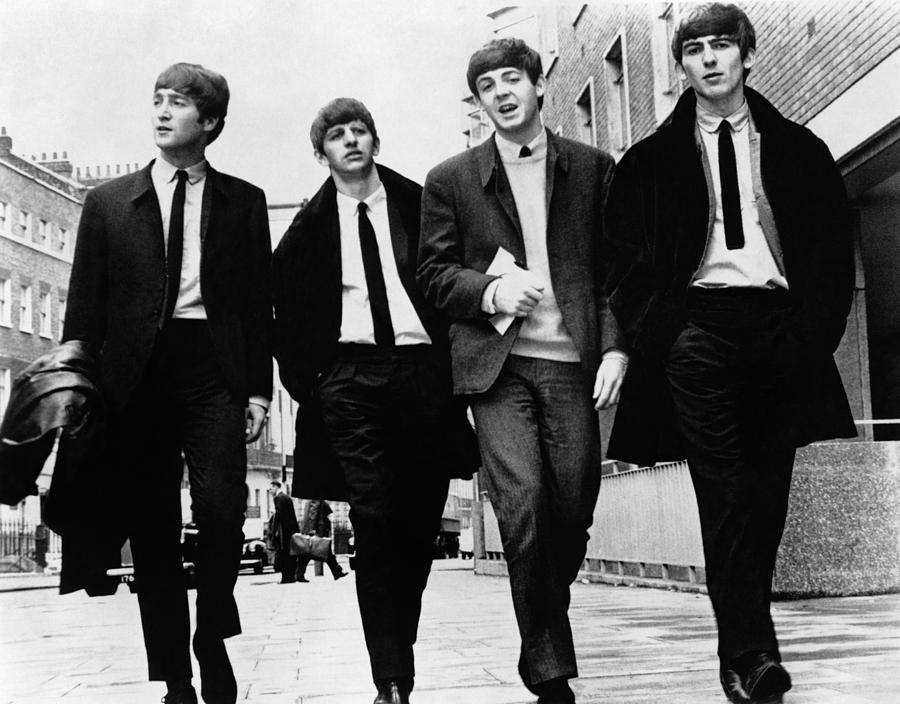
The first film auteurs began to truly come into their own after the breakdown of the Hayes censorship committee, and rock and roll music became even more challenging with acts like Bob Dylan, the Beatles, and Jimi Hendrix leading the charge towards the experimental and (occasionally hallucinogenic). More was better, whether in regards to the eyeliner, hairspray, and elaborate jewels with which film starlets adorned themselves or the splashes of colour in the bold new Pop Art. 


Now, as if in a flash of deja vu, the world seems to be reverting to this not-so-much-simpler time, as racial issues are in the forefront of everyone's minds through films such as 12 Years a Slave and The Butler or in the headlines of BBC as politicians panic over the mass amounts of Eastern European immigrants (apparently) over-running the UK. Gender relations had a rough year in 2013 ('Blurred Lines', anyone?), as it was revealed that one in five women in the UK are sexually assaulted each year (Don't believe me? You can read all about it here.) It seems some things haven't changed that much after all.

That being said, the '60s were also a very exciting few years in which major innovations in science and technology were achieved and some impressive political and social reforms were also recognised. It was in the '60s that the birth control pill was approved by the FDA allowing women to have more control over their reproductive health, and Martin Luther King Jr. made is famous 'I Have a Dream Speech' in the early years of  decade. The first heart transplant was performed in the '60s, and Neil Armstong became the first man on the moon. 


If those feats weren't impressive enough, it might also help to be reminded that Sesame Street first aired in 1969 and has been educating and entertaining children and adults alike ever since. Psycho - one of the most groundbreaking horror films of all time - was released in 1960, Andy Warhol exhibited his Campbell's soup cans in a bold comment on consumerism, and the miniskirt made its debut in the decade as well. 

In hindsight, society may not have progressed as far as we like to think we have, but by drawing parallels between the 2010s and the 1960s and examining some of the major events of years past, maybe we can finally achieve some of the objectives set out by our forerunners. 


To quote John Lennon: 

'The thing the sixties did was to show us the possibilities and the responsibility that we all had.'

As a rampant feminist, humanist, pacifist, non-conformist, former flutist, fashionist-a, I am all for keeping the '60s alive.